Ten contemporary cabins rise from the dunes of Namibia's Skeleton Coast, their angular silhouettes evoking the maritime wrecks scattered along this remote Atlantic shore. The design pays tribute without mimicry—clean lines and plush interiors contrast against an unforgiving landscape. Guided 4x4 excursions venture inland through the wilderness, while the beachfront setting at Möwe Bay rewards travelers seeking solitude at the edge of the world.
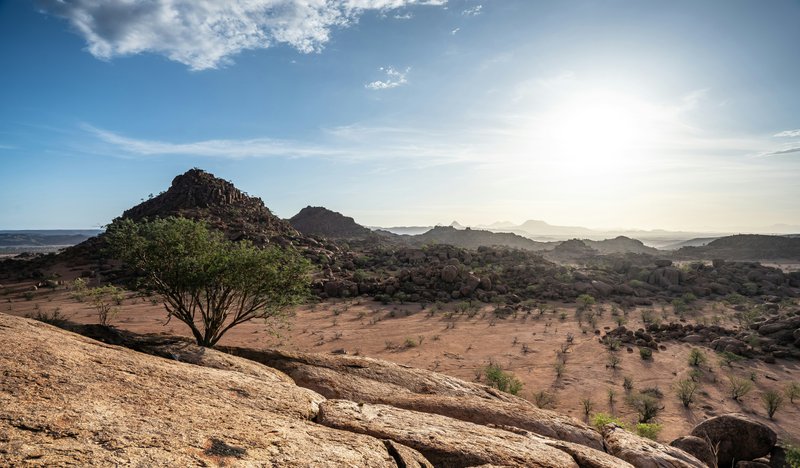
Beneath the auburn basalt spires of the Etendeka Mountains, Damaraland Camp delivers profound isolation—the kind where silence becomes texture and the sky stretches infinite overhead. Desert-adapted elephants roam these arid plains with near-certain regularity, offering wildlife encounters stripped of safari crowds. Two family tents accommodate adventurous teenagers ready for raw wilderness, while the kitchen produces unexpectedly refined meals given the remoteness.
Eight canvas tents scatter across the stark Palmwag Reserve, one of the planet's last refuges for critically endangered black rhinos. This unfenced camp in northern Namibia strips safari to its essence: tracker-led drives through searing wilderness, returning to simple comforts under vast skies. The remoteness demands patience, but few places offer such unmediated proximity to these elusive giants.
Named for 'the place where rhinos once lived' in the Damara click language, Doro Nawas occupies what may be the most extreme camp location anywhere on the continent. The rugged Damaraland terrain surrounds low-slung accommodations that embrace the stark landscape rather than fight it. Two family units suit adventurous teenagers ready for wilderness immersion, though younger children may find the remoteness challenging.
Pitched along the dry Hoanib riverbed in Kaokoland, this luxury tented camp delivers front-row access to one of Africa's most pristine wilderness corridors. Desert-adapted elephants and lions roam freely across the stark landscape. A partnership with the Giraffe Conservation Foundation offers families meaningful wildlife engagement, with one dedicated tent welcoming children of all ages into this remote, untouched corner of Namibia.
Frequently Asked Questions
When is the best time to see desert-adapted elephants in Damaraland?
+
The dry season from May to October concentrates wildlife around the Huab and Aba-Huab riverbeds, making elephant sightings more predictable. Guides track family groups along these watercourses, often locating herds in the early morning as they move between feeding areas.
How do Damaraland's community conservancies work?
+
Namibia pioneered communal conservancies in 1996, granting local communities rights to manage wildlife on their ancestral lands. In Damaraland, conservancies like Torra and Doro !Nawas partner with lodges, sharing tourism revenue that funds anti-poaching patrols, schools, and water infrastructure.
What should visitors know about reaching Twyfelfontein?
+
Twyfelfontein lies roughly 100 kilometers west of Khorixas on gravel roads passable by two-wheel-drive vehicles in dry conditions. Guided walks to the engravings take about an hour. Morning visits avoid the midday heat that radiates off the sandstone surfaces.
Damaraland stretches across northwestern Namibia in a sweep of rust-colored plains, basalt columns, and petrified forests. The region takes its name from the Damara people, whose presence here predates colonial contact by centuries. Twyfelfontein, a UNESCO World Heritage Site, preserves over 2,000 Stone Age rock engravings — geometric patterns and animal figures carved into sandstone by San hunter-gatherers some 6,000 years ago. The landscape itself reads like geological time made visible: the Brandberg massif rises to 2,573 meters, while the Organ Pipes formation displays columnar dolerite stacked like an ancient cathedral.
Wildlife here has evolved for scarcity. Desert-adapted elephants travel enormous distances between water sources, their smaller frames and wider feet suited to rocky terrain. Black rhinos, among Africa's most endangered mammals, find sanctuary in the conservancies managed jointly by local communities and conservation trusts. Accommodation ranges from tented camps positioned near seasonal riverbeds to lodges built into the rock formations themselves, their architecture deliberately minimalist against the dramatic backdrop. The nearest town, Khorixas, serves as a supply point rather than a destination — the draw is the emptiness itself, the night skies unpolluted by artificial light, the silence broken only by wind through the mopane scrub.