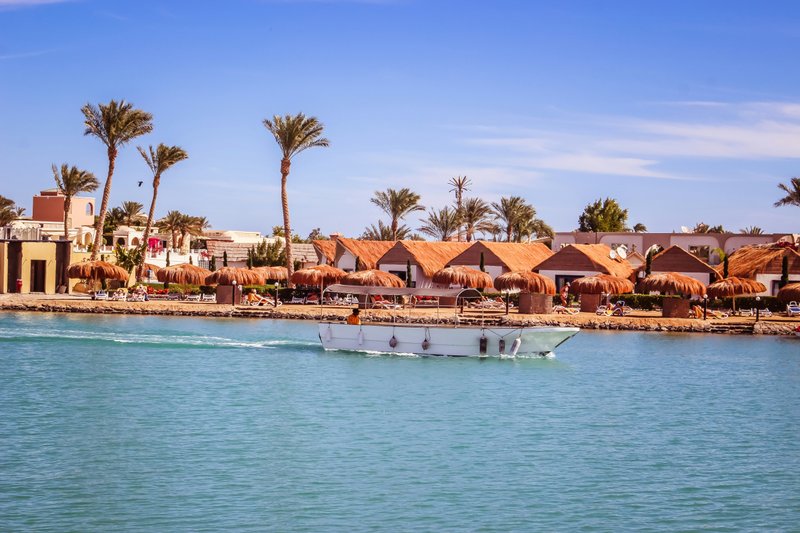
Classical architecture dominates this 289-room Red Sea resort, eschewing Dubai-style flash for an almost ostentatiously traditional aesthetic. Even entry-level accommodations feature private terraces and substantial marble bathrooms, while top suites attract billionaires and heads of state. Despite capacity for 700-900 guests, calibrated staffing maintains genuine intimacy. First-rate diving and snorkeling access the reef directly from the beachfront property.
Where to Stay
Amr Khalil's fantastical design unfolds across just thirteen suites where Minoan frescoes share walls with Syrian arches and Venetian tilework, creating a surreal adults-only retreat beside a private lagoon. Suites gaze toward the Western Desert mountains, their interiors heavy with antiques and silk. A Roman-style spa and marble-lined pool complete the escape, while French chef Vincent Guillou bridges European and Egyptian flavors in the kitchen.
Brutalist concrete forms inspired by Nubian village architecture rise from Egypt's Red Sea coast, their stark geometry tempered by rattan, timber, and linen interiors. Villas with private pools and suites with roof terraces frame views of sand and sea. The beach club pulses with DJ sets and cocktails, while a spa with Turkish hammam and desert excursions offer counterpoint—hedonism and restoration in deliberate balance.
Terracotta façades in traditional Egyptian style give way to serene Asian minimalism inside The Chedi El Gouna, where ebony furniture and bamboo accents create meditative calm. The private Red Sea beach draws active guests with diving, snorkeling, and kayaking, while a zen-influenced spa offers hammam rituals and an extensive massage menu. Evening dining ascends to a rooftop Japanese restaurant with open-air tables overlooking the water.
Domed villas with private terraces stretch across landscaped gardens at the southern edge of Hurghada, a deliberate counterpoint to the resort strip's crowded energy. High-ceilinged interiors fill with morning light, while some suites add plunge pools steps from the bedroom. The kitchen moves confidently between Indian breakfasts and grilled Red Sea catch, served within sight of the water. Service runs warm and precise throughout.
What to Do
Blue and white treatment cabins set the tone at this adults-only retreat beside a private Red Sea lagoon. Therapists draw on Ayurvedic and Thai traditions, while a hammam and sauna deepen the restorative experience. Outside, a heated pool lies framed by gardens and Italianate colonnades—architecture that echoes the property's marble interiors and coffered ceilings, all steps from a sandy lagoon beach.
Frequently Asked Questions
What is the best season to visit Egypt's Red Sea resorts?
+
October through April offers ideal conditions — water temperatures remain warm enough for diving while air temperatures stay comfortable in the mid-20s Celsius. Summer months bring intense heat exceeding 40°C, though the dry climate and sea breezes make coastal resorts more bearable than the Nile Valley.
How do El Gouna, Hurghada, and Marsa Alam differ as destinations?
+
El Gouna suits those wanting a self-contained resort town with upscale dining and a compact marina district. Hurghada offers the widest range of accommodations and nightlife but lacks the refinement. Marsa Alam rewards travelers seeking pristine dive sites and authentic remoteness — the trade-off being fewer amenities and longer transfers from the airport.
Are the Red Sea resorts suitable for non-divers?
+
Absolutely. Desert excursions to Bedouin camps, kitesurfing in El Gouna's lagoons, snorkeling from hotel beaches, and boat trips to offshore islands all cater to surface-level travelers. Many hotels also arrange visits to Luxor by road or private flight for those wanting to combine coast with antiquities.
Egypt's Red Sea coast stretches some 1,200 kilometers from Suez to the Sudanese border, but the resorts that matter cluster around three distinct zones. Hurghada, the original beach town, grew from a modest fishing village in the 1980s into a sprawling resort strip where package tourism meets genuine Egyptian warmth. Further south, El Gouna operates as a purpose-built lagoon town — its Italianate architecture and network of canals creating an almost Mediterranean atmosphere against the desert backdrop.
Marsa Alam remains the frontier, where the reef systems are healthier and the crowds thinner. Here, small eco-lodges compete with the larger chains, and Bedouin culture from the Eastern Desert still shapes local hospitality. The marine life draws serious divers: spinner dolphins at Samadai Reef, dugongs grazing seagrass at Abu Dabbab, hammerheads circling the Brothers Islands. On land, the service culture reflects Egypt's traditional generosity — expect genuine welcomes rather than scripted luxury, fresh-caught seafood over imported ingredients, and a pace that slows as the desert heat rises.