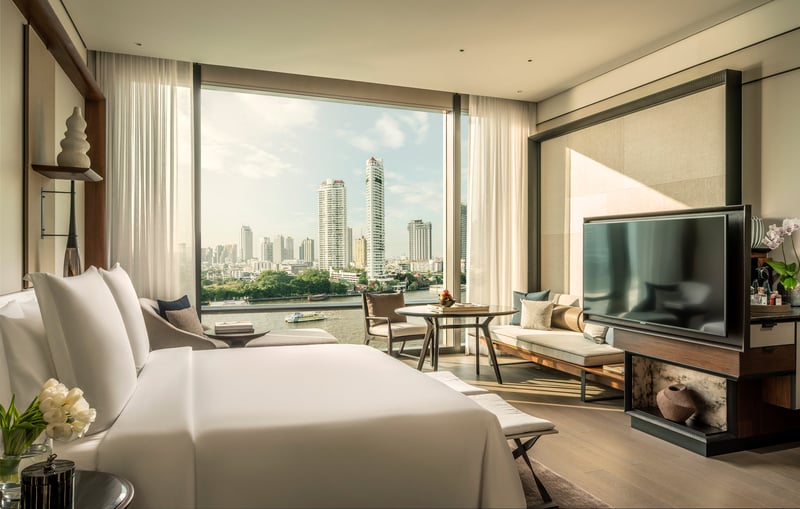
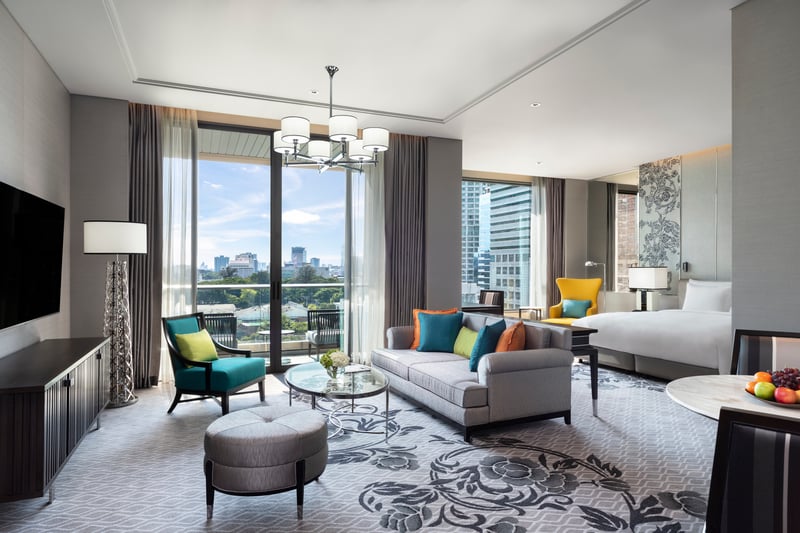
In Bangkok, Elements, Inspired by Ciel Bleu Celebrates Franco-Japanese Haute Cuisine


Within The Okura Prestige Bangkok, Elements, Inspired by Ciel Bleu stands as an essential destination for Franco-Japanese gastronomy in Bangkok. In an elegant and contemporary setting, the Michelin-starred restaurant offers cuisine of remarkable finesse, guided by seasonality, technical precision, and a constant pursuit of balance. Through its autumn menu, the table reveals an accomplished culinary approach, where each dish tells a subtle dialogue between French rigor and Japanese sensibility, offering a gastronomic experience that is both sophisticated and deeply sensorial.
A Starred Table in the Heart of The Okura Prestige Bangkok
Located within The Okura Prestige Bangkok hotel, Elements, Inspired by Ciel Bleu is set in an elegant and resolutely contemporary décor. Vast floor-to-ceiling windows structure the space and bathe the dining room in light, while a refined palette blending wood and charcoal tones, accentuated by anthracite walls and large light fixtures, creates a chic and intimate atmosphere. The open kitchen, designed as a true culinary theater, occupies a central position and brings a lively dimension to the ensemble, extended by an outdoor terrace that offers views of the skyline.


On the gastronomic side, the restaurant presents French cuisine with Japanese influences, awarded one Michelin star. The seasonal tasting menus showcase premium ingredients, often Japanese, prepared with great technical precision. Each plate explores a subtle balance of textures, temperatures, flavors, and colors, with particular attention paid to seasonality and umami, offering a sophisticated and deeply comforting epicurean experience.


The Franco-Japanese Vision of Chef Gerard Villaret Horcajo
Executive Chef of the Michelin-starred restaurant Elements, Inspired by Ciel Bleu, Gerard Villaret Horcajo embodies a demanding and contemporary vision of haute cuisine. Originally from Spain, he built his career within some of Europe's most prestigious establishments, developing solid expertise in multi-Michelin-starred restaurants. After honing his craft at Ciel Bleu in Amsterdam, he joined Bangkok to take the helm of Elements, Inspired by Ciel Bleu, where he fully expresses his culinary philosophy. Guided by seasonality, rigorous selection of premium products, and precision in cooking techniques, he dedicates himself to elevating each ingredient by marrying the rigor of French cuisine with Japanese aesthetics and sensibility. This approach, both creative and masterful, contributes essentially to the identity and influence of the restaurant on the international gastronomic scene.

A Sensory Journey into the Heart of the Autumn Season
We had the pleasure of discovering the new seasonal menu "Autumn Guestronomic Dining Journey," a true invitation to culinary travel. This rich and nuanced tasting menu celebrates the finest products of autumn, meticulously crafted to give birth to a gastronomic narrative of great coherence. Three tasting experiences are offered to satisfy all desires: the "Mizu" experience with 7 courses, the "Chikyu" experience with 6 courses—which we chose—and the "Ku-Ki" experience with 4 courses. Additionally, an à la carte menu also allows guests to compose their own journey according to their preferences.

The dinner begins with a series of amuse-bouches that aptly illustrate the Franco-Japanese alliance at the heart of the chef's cuisine. From the very first bites, the technical precision and balance of flavors set the tone for the experience to come, all accompanied by a glass of Ruinart champagne.

The journey continues with a starter of great visual purity. In a large immaculate plate, a slice of wild-caught Japanese amberjack from Himi is delicately placed. It rests in a kabosu dashi with subtle acidity, punctuated by a shungiku emulsion with slightly bitter vegetal notes. Tiny flowers perfect the presentation, while Itoshima oyster discreetly blends into the ensemble, bringing a refined briny touch. The balance is remarkable, both visually and gustatorily: freshness, umami, and delicacy express themselves with restraint, immediately establishing an impression of great mastery.

Next arrives a golden, gleaming brioche, presented with elegant simplicity. Made from stone-ground Yame Tanaka flour and enriched with shiitake, it reveals a soft and delicately perfumed crumb, where the woodsy notes of the mushroom bring subtle depth. Its indulgent, deliberately nostalgic character is elevated by two butters served separately: a French salted butter, melting and comforting, and a smoked Ariake nori butter, more intense and briny, which gracefully extends the Japanese influence.

The homemade yakisoba noodles are then served in a delicate crystal cup, highlighting the contrast between the simplicity of the dish and the sophistication of its execution. Finely crafted and perfectly lustrous, they coil with precision and are coated in a velvety sauce with golden hues. The murasaki uni, sparingly placed, brings a creamy texture and remarkable marine intensity. The hojiso adds herbaceous freshness, while the myoga, crisp and slightly pungent, balances the richness of the ensemble. A great Japanese classic reinterpreted with elegance and modernity, where umami expresses itself with subtlety.


The Jean Larnaudie foie gras is then presented in a delicate composition. Its meltingly smooth texture is enhanced by a creamy base, while the artichoke brings vegetal freshness and a slight bitterness. The dashi vinegar glaze balances the ensemble with a fine and controlled acidity, creating a harmonious dialogue between French and Japanese influences. The mimolette provides nutty notes, while Medjool dates introduce a warm sweetness. Fine shavings of truffle, generously placed, complete the dish with immediate aromatic intensity, reinforcing its autumnal and luxurious character.

Following is the aged mikan sea bream, presented in a sauce based on Kintoki carrot with deep orange hues. The aging of the fish concentrates the flavors while preserving a delicate, pearlescent flesh with slightly crispy skin. The smoked mussels bring a warm briny intensity, while the Kaluga hybrid caviar introduces elegant saline touches. Tarragon ties the ensemble together with a subtle anise freshness, highlighting the natural sweetness of the carrot and offering a perfectly balanced plate.


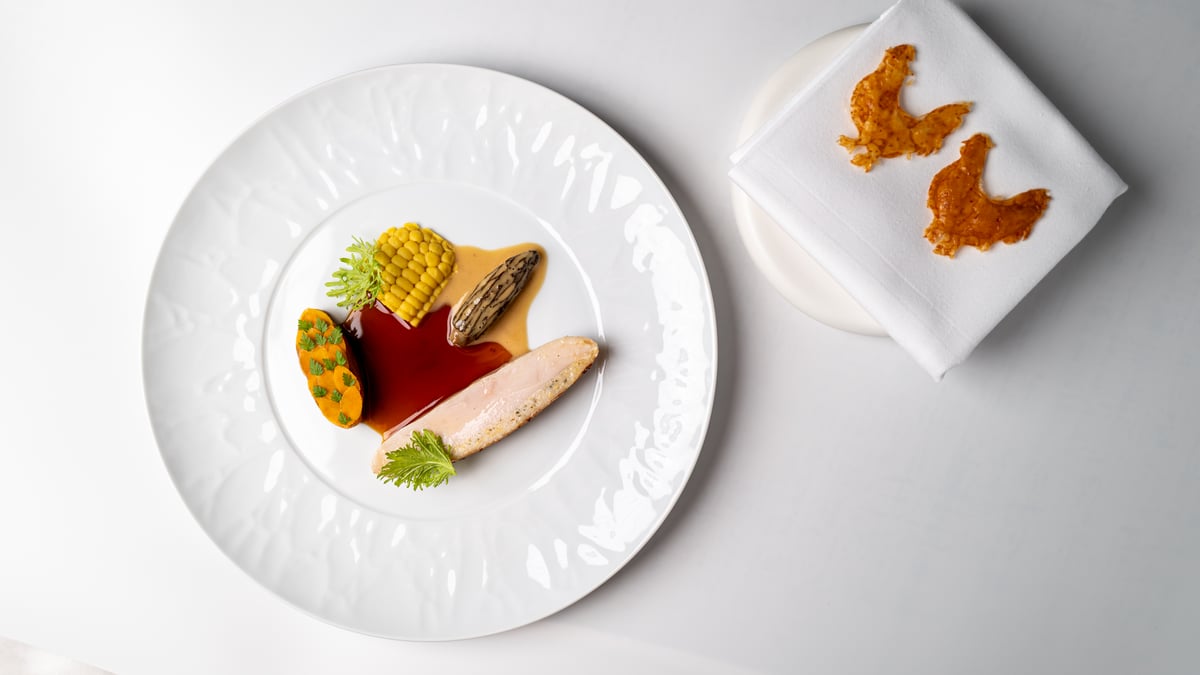
For the main course, I opted for the free-range chicken aged with koji. Its flesh, of a pearlescent whiteness, is particularly tender and juicy, the result of masterful aging. It is coated in a vin jaune sauce with deep accents, in which morels bring an earthy, woodsy dimension. The kabocha squash, sweet and slightly sugary, balances the ensemble, while the crispy chicken skin, cut into the shape of a rooster, adds a playful and indulgent touch, almost nostalgic.

My husband preferred the A5 wagyu ribeye from Arita Farm in Miyazaki. Cut into thick slices and seared with precision, the meat reveals exceptional marbling, melting and juicy. The intense brown jus underscores its aromatic depth without ever overpowering it. The radicchio brings a structuring bitterness, the dry-aged beet develops concentrated and slightly sweet notes, while the yakiniku-style black garlic reinforces the umami, balanced by the herbaceous vivacity of egoma mustard.


After a refreshing pre-dessert of yuzu and matcha, prepared before our eyes, the autumn menu desserts take center stage. My husband chose the tonka bean crème caramel, with its smooth and silky texture. The caramel brings a soft, enveloping bitterness, while the tonka bean diffuses warm and slightly spiced notes. The toasted pecan structures the ensemble, the satsumaimo caramel adds an indulgent depth, and the fig leaf ice cream brings a welcome vegetal freshness.


I opted for the Yame persimmon, showcased in a refined plate. Its melting, luminous flesh is elevated by a zesty Cha-Am lemon cream, bright and tangy. The vanilla chantilly brings a delicate roundness, while the chestnut shortbread adds a crisp, woodsy note. The dinner finally concludes with mignardises, presented like true pastry jewels. Macarons delicately marked with the Elements logo, floral bites, and spherical pieces compose a final gourmet score, playful and elegant. A joyful and poetic conclusion, extending the gastronomic experience with finesse until the very last bite.


My Opinion
Elements, Inspired by Ciel Bleu stands as an exceptional table where every detail, from the setting to the last mignardise, contributes to an experience of rare coherence. Gerard Villaret Horcajo's cuisine captivates with its precision, sensitivity, and ability to elegantly bring French and Japanese cultures into dialogue. The autumn menu, at once generous, masterful, and deeply seasonal, tells a complete culinary story, carried by remarkable products and impeccable execution. This experience feels like a suspended moment, fully confirming the restaurant's place among Bangkok's great gastronomic tables.
Contact Details
Elements, Inspired by Ciel Bleu