In Bangkok, NAWA Elevates Tradition to the Rank of a Contemporary Star


In the heart of Bangkok, NAWA offers a singular interpretation of contemporary Thailand, where gastronomy, design, and cultural identity intertwine with rare coherence. Awarded a Michelin star, the restaurant is conceived as a space of expression—a place where collective memory and the chefs' personal influences engage in dialogue through a resolutely modern aesthetic. Through precise cuisine and a carefully designed setting, the experience invites guests to rediscover the Thai soul through a contemporary, sensitive lens that remains deeply rooted in its territory.
The Modern Expression of the Thai Soul
Located in Ekkamai, NAWA reveals an interior designed by Airbase Studio, where contemporary design subtly draws inspiration from Thai heritage. Evoking temple tiles and the bases of chedis, the space combines warm tones, natural textures, and controlled lighting to create an elegant, immersive atmosphere. At its center, a vast open kitchen bathed in light brings life and energy to the restaurant, while semi-private and private areas offer a harmonious balance between intimacy and openness to the dining room. The logo, formed by the interlacing of an N and a W, embodies Nawa, a symbol of innovation in Thai.


The Essence of Thailand Through a Modern Perspective
NAWA embodies a contemporary and demanding vision of Thai cuisine, led by Chef Napol “Joe” Jantraget and Chef Saki Hoshino. Together, they reinterpret the comforting and familiar flavors of Thailand through modern techniques, while remaining faithful to the country's gustatory identity. Inspired by childhood memories and local traditions, their cuisine celebrates the diversity of Thai terroirs, from North to South, with particular attention paid to the provenance of ingredients, sourced directly from fishermen and small producers to ensure authenticity and seasonality.

This approach is fully expressed through NAWA's tasting menu, conceived as a sensory journey through the many facets of Thai cuisine. In just nine months, this singular vision was recognized by the MICHELIN Guide Thailand, which awarded NAWA one star as well as the Opening of the Year 2024 award, confirming its status as a major reference in modern Thai gastronomy.

When Two Cultures Inspire One Table
At the helm of NAWA, Chef Napol “Joe” Jantraget and Chef Saki Hoshino embody a sensitive and bold approach to contemporary Thai gastronomy. Born in Bangkok, Chef Joe is recognized as one of the pioneers of New Thai Cuisine, with a career shaped by fine dining. At NAWA, he elevates Thai ingredients through a personal vision, transforming familiar flavors into immersive experiences rich in emotion and discovery. By his side, Chef Saki brings precision and delicacy inherited from her Japanese culture. Born and raised in Nagoya, she enriches NAWA's cuisine with her keen attention to detail, particularly through desserts, fermentation techniques, and the use of seasonal ingredients. Together, this husband-and-wife duo creates a balanced and deeply contemporary cuisine, where innovation, tradition, and cultural identity converse with precision.


Nine Creations to Explore Thai Cuisine
The current tasting menu consists of nine dishes, presented as a succession of bites, small portions, and reinterpretations of emblematic dishes. This seasonal menu evolves twice a year, following the rhythm of ingredients and the chefs' inspiration.
The opening bite, titled Welcome, revisits Ma Hor, an iconic Thai snack, in a delicate and contemporary interpretation. A fine bite of spiced pineapple is accompanied by a fermented pineapple juice with tangy and slightly complex notes. This introduction opens the meal with freshness and precision, playing on the balance between natural sweetness and controlled fermentation. By using both the fruit and its fermented juice, NAWA affirms its sustainable philosophy while transforming a traditional snack into a subtle prelude to the culinary journey ahead.

Grouped under the title Seasonal Snacks, the following bites highlight seasonal produce through finely balanced textures and flavors. Corn & Uni takes the form of a canelé, crisp on the outside, enclosing a silky mousse of corn and sea urchin with soft, milky, and naturally sweet notes. Local Fish appears as an elegant shallot tartlet accented with lemongrass, where local fish replaces the shrimp usually used, bringing subtle freshness and aromatic nuance. Finally, Blue Crab combines crab and tofu in a delicate composition, enhanced by a light aioli that underscores the sweetness of the crustacean.


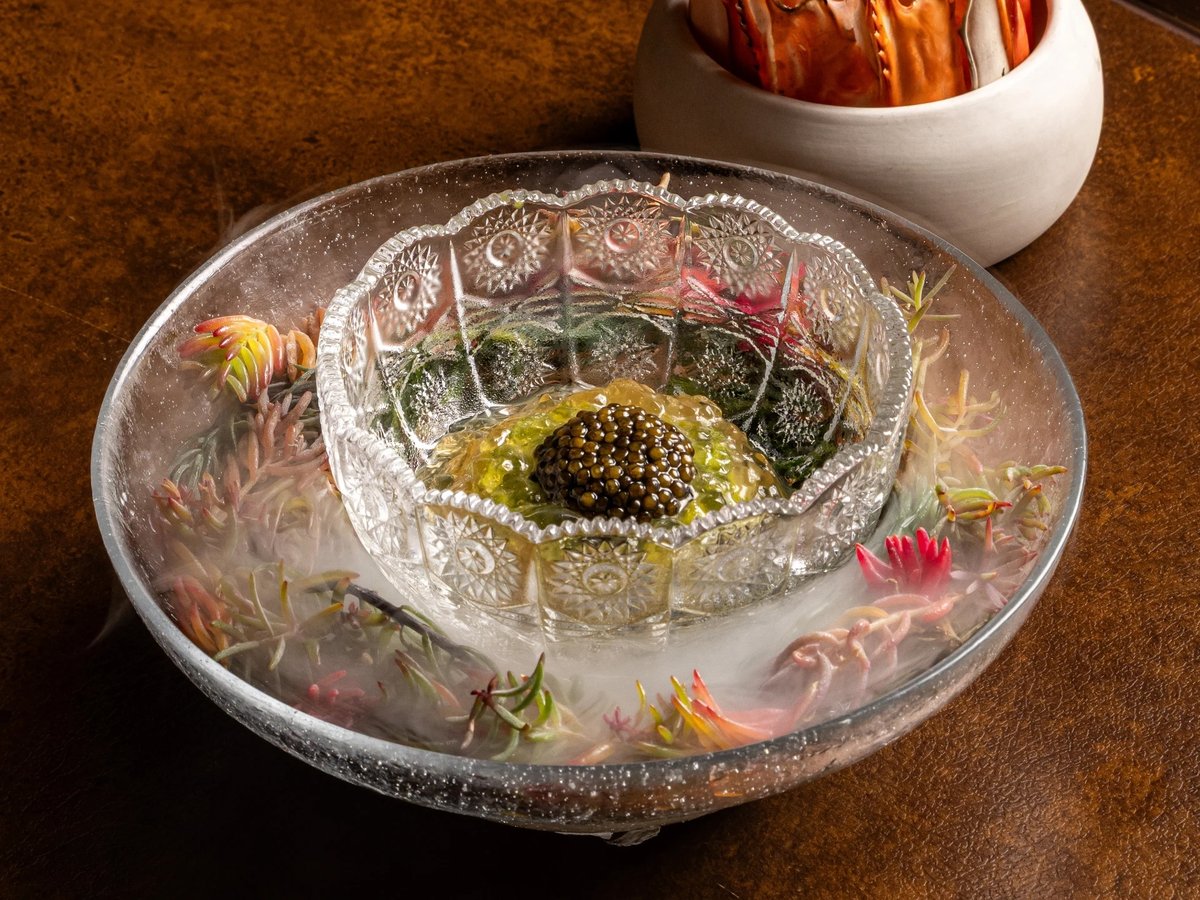
A timeless classic of Thai cuisine, Kung Chae Nam Pla is revisited here in an elegant and contemporary version focused on product purity and flavor intensity. The white shrimp, delicately aged in fish sauce, is served raw to preserve its silky texture and natural sweetness, then lifted by bold notes of chili and lime. Kaluga caviar, placed at the center of the dish, brings iodized depth and refinement, while the prawn cracker, warmed and crisped to order, is cooked in front of guests, adding a sensory dimension and textural contrast.


With Kanom Jeen, tradition is approached in a more poetic way. Usually served with rice noodles, the dish is reinterpreted using a roll of banana squid from Phuket, worked delicately to evoke the lightness of noodles. Inside, the squid is paired with a mix of fruits and herbs forming a fresh, aromatic salad, subtly lifted by floral notes of elderflower. A creamy coconut sauce envelops the dish, while a fish paste served on the side adds depth and character.

The Oyster Omelette draws inspiration from a popular Taiwanese dish, revisited through a contemporary Thai sensibility. Oysters from Phetchaburi are paired with a delicately airy egg foam, while sago, worked in different textures, replaces traditional starch and provides both softness and structure. A drizzle of chili oil lifts the whole, highlighting the oysters' iodized sweetness and the richness of the egg in a precise balance between creaminess and spicy warmth.

Conceived as a landscape centered around shrimp, River Prawn unfolds a generous and structured composition. The river prawn, precisely grilled, is accompanied by a rich and intense tomalley relish, enhancing its iodized depth. Around it, sticky rice cooked in bamboo from a micro-producer in Chiang Mai brings softness and roundness, while a fresh mango and herb salad lightens the dish. Shrimp cheeks, served separately, offer a melting and concentrated texture. The dish is completed with a blend of aromatic herbs that balances heat with vegetal and refreshing notes.


The journey continues with Kalasin Free-range Chicken, a nuanced and comforting interpretation of Thai chicken centered on the depth of curry. The free-range chicken from Kalasin is presented in several expressions: coated in a rich, spiced curry sauce, accompanied by a light mousse that softens the spices, and completed with a clear, fragrant consommé that adds precision and elegance. On the side, a Thai-style biryani rice enriched with pieces of chicken offers a soft, spiced texture, while cucumber ajaad in sweet-and-sour pickles introduces freshness and contrast.


The transition to dessert comes with Seasonal Fruit, a composition imagined by Chef Saki that blends Thai references with Japanese sensibility. Presented as a series of petits fours, this sequence showcases seasonal fruits worked with finesse: guava paired with a chili paste for a sweet-spicy contrast, a gently soft banana bite, and a reinterpretation of mango sticky rice in the form of a tartlet, where sticky rice is replaced by delicate mochi. A longan jelly completes the ensemble, bringing freshness and lightness, and subtly preparing the palate for what follows.

The meal concludes with Kanom Sai Sai, a contemporary interpretation of a traditional Thai snack. The coconut panna cotta, remarkably smooth, is enriched with coconut in several forms—caramelized flesh, mochi, and coconut water jelly—creating a play of textures that is both precise and indulgent. Placed on top, caviar adds an unexpected saline touch, balancing the dessert's creamy roundness. An elegant and controlled finale that encapsulates the spirit of NAWA: cuisine rooted in tradition, driven by technique, and open to innovation.

My Opinion
At NAWA, every plate, every gesture, and every space contributes to a coherent and deeply thoughtful narrative of contemporary Thailand. Far from a simple reinterpretation, the experience resembles a subtle dialogue between memory and modernity, where culinary traditions evolve without ever losing their essence. Driven by the complementary talents of Chef Napol “Joe” Jantraget and Chef Saki Hoshino, this vision affirms a sensitive, precise, and bold gastronomy. NAWA thus establishes itself as a place of transmission and creation, where Thai heritage is expressed with elegance, accuracy, and a deep awareness of the present.
Contact Details
NAWA