Why Café de la Paix Is the Must-Visit Restaurant in Paris


In Paris, some places don't just exist—they tell a story, imbue the city with their aura, and become a living stage for its timeless elegance. The Café de la Paix is one of them. Since 1862, this legendary institution has brilliantly embodied the Haussmann spirit and the French art of living. Over the decades, it has preserved its splendor and refinement, welcoming writers, artists, and travelers from around the world in an exceptional setting. Even today, it continues to radiate Parisian elegance with understated modernity and a keen sense of excellence.
A Century and a Half of Parisian Elegance
Located at the corner of Boulevard des Capucines and Place de l'Opéra, the Café de la Paix enjoys a strategic position in the heart of Paris's theater district. Attached to the Grand Hôtel (now the InterContinental Paris Le Grand) with which it opened in 1862, this iconic establishment has shone for more than 160 years in the cultural and social life of the capital. Its sumptuous Napoleon III décor, listed as a historical monument for nearly fifty years, gives it a timeless charm that attracts both visitors and local regulars. A true institution, it embodies the elegance and splendor of Haussmannian Paris.

Over the decades, the Café de la Paix has seen major artistic and political figures pass through its doors, becoming an essential meeting point. The Prince of Wales was a regular, Guy de Maupassant and Victor Hugo left their spirit lingering, while Ernest Hemingway and François Mauriac made it their refuge. A gathering place for avant-garde movements, particularly in the early 20th century, it has maintained its prestige despite changing eras. From the golden age of the 1930s to the postwar buzz, through to contemporary transformations, the Café de la Paix remains a living symbol of Parisian elegance and cultural heritage.
The Renaissance of the Café de la Paix
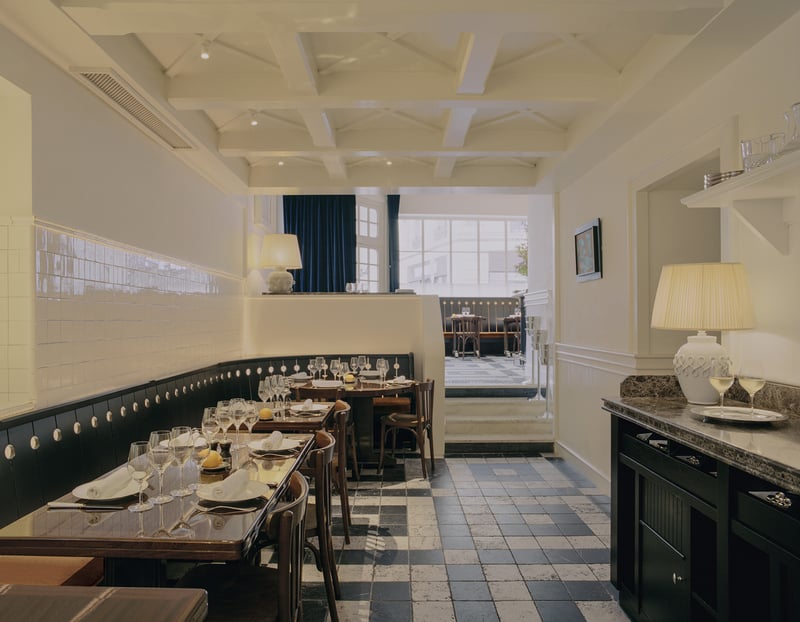
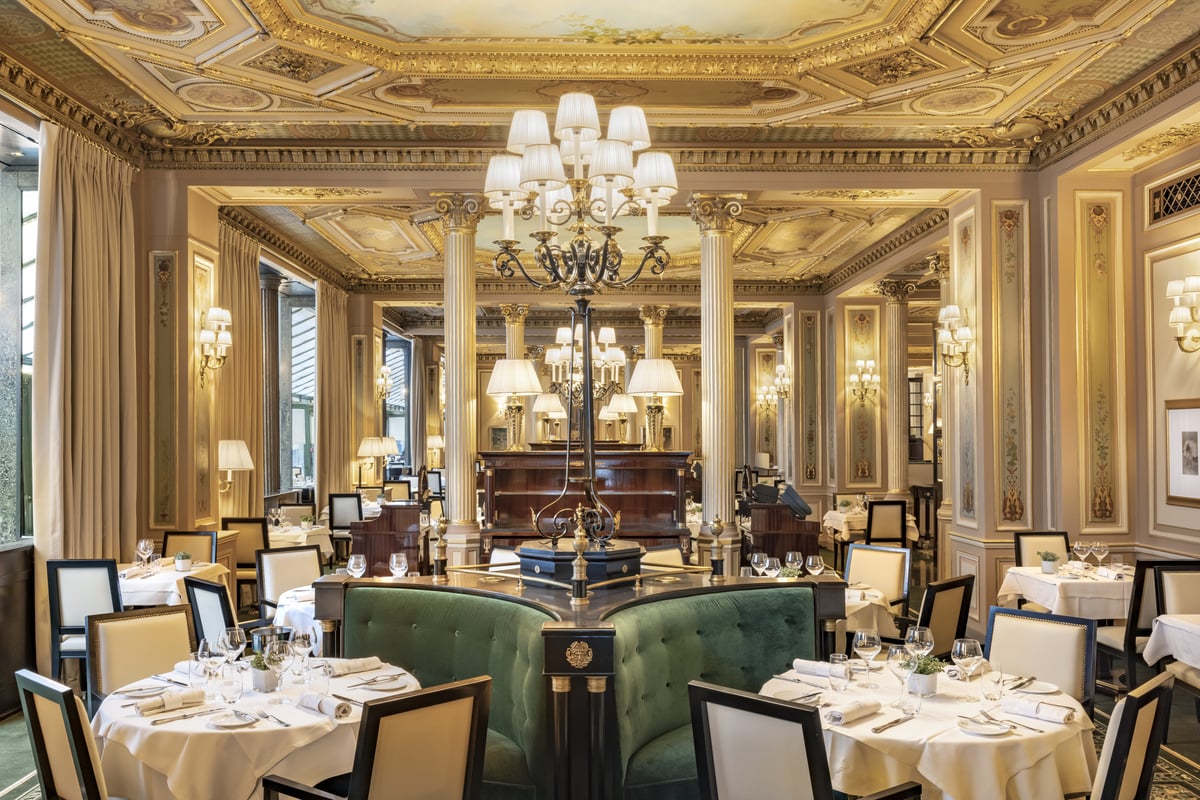
The Café de la Paix has recently regained its full splendor thanks to its third restoration campaign led by renowned interior architect Pierre-Yves Rochon, completed in 2021. Remaining faithful to the lavish elegance of the Belle Époque, he has elevated the venue's original spirit while adding a discreet touch of modernity. The grand room facing Boulevard des Capucines reveals a sumptuous décor, dominated by its iconic fluted columns, coffered ceilings adorned with painted skies, and dark wood furnishings. Cream leather Louis XVI-style armchairs, green velvet banquettes, and a multitude of golden lights create a refined atmosphere bathed in light and nobility.


On the Place de l'Opéra side, the ambiance is more relaxed, evoking a winter garden feel, designed to welcome guests at any time for a drink or a pastry. The bleached oak furniture harmonizes with leaf-patterned cushions and wall fabrics that mimic straw. The carpeted floor, inspired by a leaf design by Madeleine Castaing, enhances this peaceful, botanical feeling. By sensitively redesigning these two settings, Pierre-Yves Rochon has preserved the soul of the Café de la Paix while breathing new contemporary life into its legend.

Between Heritage and Creativity: The Art of Laurent André
At the helm of the Café de la Paix's kitchen, Chef Laurent André perfectly embodies French culinary elegance. A native of Jura and trained by legends Alain Chapel and Alain Ducasse, he presents a menu that celebrates great Parisian brasserie classics, while confidently injecting modern touches. Meats and fish are served tableside, honoring traditional table service, and the seafood bar — open all year except in summer — reinforces this timeless atmosphere. Through the Market and Signature menus, the chef showcases carefully selected regional products, offering cuisine that is generous, refined, and true to the venue's identity. Also not to be missed: the Sunday brunch, which has become one of Paris's most sought-after over the years.


Delights of Yesterday and Today
To begin this lunch at the Café de la Paix, we decided to try several of the house's iconic starters, each one highlighting traditional French craftsmanship. My husband, unable to choose between two equally tempting options, ended up going for a half-portion of onion soup and a half-portion of foie gras — a delicious way to indulge without missing out on anything.

Served in a handled bowl on an elegant white plate, the Café de la Paix's gratinée onion soup represents Parisian culinary heritage at its finest. Made according to the original 1862 recipe, this signature soup opens the meal with warmth and authenticity. Slowly caramelized onions reveal their full sweetness, while a generous layer of aged Comté forms a golden, melty crust on top. This classic, carefully reinterpreted by Chef Laurent André, pays tribute to the house's origins while delighting modern palates.

Elegantly plated, the confit duck foie gras immediately seduces with its presentation. It's served with a rhubarb chutney, whose subtle acidity balances the richness of the foie gras, and thin green apple slices arranged in a lattice for a crunchy, lively touch. A slice of toasted country bread completes the dish, perfect for revealing the full indulgence of this refined classic.

As for me, I chose the pâté en croûte. This version, made with duck and poultry, recalls the grand tradition of French charcuterie. Its clean cut reveals a generous filling dotted with Piedmont hazelnuts, adding crunch and roundness. The perfectly golden crust wraps it all in elegance. On the side, a pink onion confit adds a sweet and mild touch, contrasted by the tang of pickles.
Served with all the ceremony of fine dining, the Café de la Paix's sole meunière is expertly filleted tableside. Caught off the French coast, this exceptional fish is perfectly golden and topped with brown butter. It's served with a remarkably smooth mashed potato purée, which elevates the dish with elegant simplicity. A must-try, masterfully executed with refinement.


The stuffed poularde roast, meanwhile, fully embodies the nobility of rustic French cuisine. Filled with foie gras and mushrooms, the poultry is topped with a morel and yellow wine sauce, a nod to Chef Laurent André's home region. Its tender, delicately roasted meat pairs beautifully with the woody depth of the sauce. On the side, green asparagus brings vegetal freshness, while the French-style peas, served separately in a cocotte, offer a springtime, savory note. A generous dish, perfectly balanced and expertly executed.


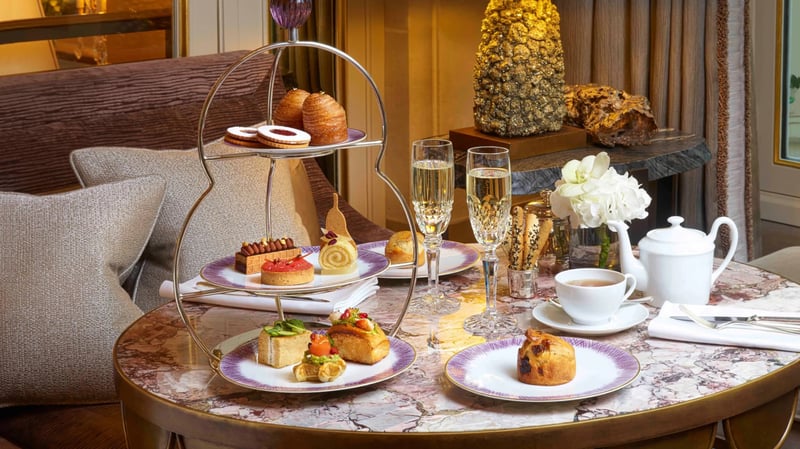
To end the meal on a high note, we treated ourselves to tea and sweets. The refined sencha tea came with three treats: a caramelized millefeuille — crisp on the outside and melting inside — featuring a Madagascar vanilla custard of exquisite lightness, enhanced with a drizzle of salted caramel. The opera cake, a timeless classic carefully reimagined, revealed balanced layers of soft sponge, coffee buttercream, and chocolate ganache under a glossy glaze. As for the blueberry tart, it charmed us with the freshness of its vibrant fruit atop a thin, crispy shortcrust. A few strawberries, chocolates, and fruit jellies rounded out this sweet symphony for a delightfully elegant finale.

My Opinion
Leaving the Café de la Paix, I couldn't help but feel that rare sensation of having traveled through time, between historical grandeur and contemporary excellence. Every detail — from the sumptuous décor to the flawlessly prepared dishes — reminded me why this place remains a must-visit in Paris. It's an ode to elegance, tradition, and French gastronomy as we love it: sincere, skillful, and timeless. I wholeheartedly recommend it to all lovers of French cuisine.