INDDEE: A Poetic Immersion into Indian Haute Cuisine in Bangkok


Located in a century-old townhouse in the heart of the Lumphini district, INDDEE offers a sensory immersion into contemporary India through a gastronomic approach as refined as it is narrative. A Michelin-starred restaurant, it stands out for its meticulous design, hushed atmosphere, and signature cuisine led by chef Sachin Poojary. The multi-course tasting menu invites diners on a journey through the regional traditions of the subcontinent, reinterpreted with precision, creativity, and modernity — an experience we had the pleasure of discovering during dinner.
A Refined Aesthetic to Enhance Contemporary India
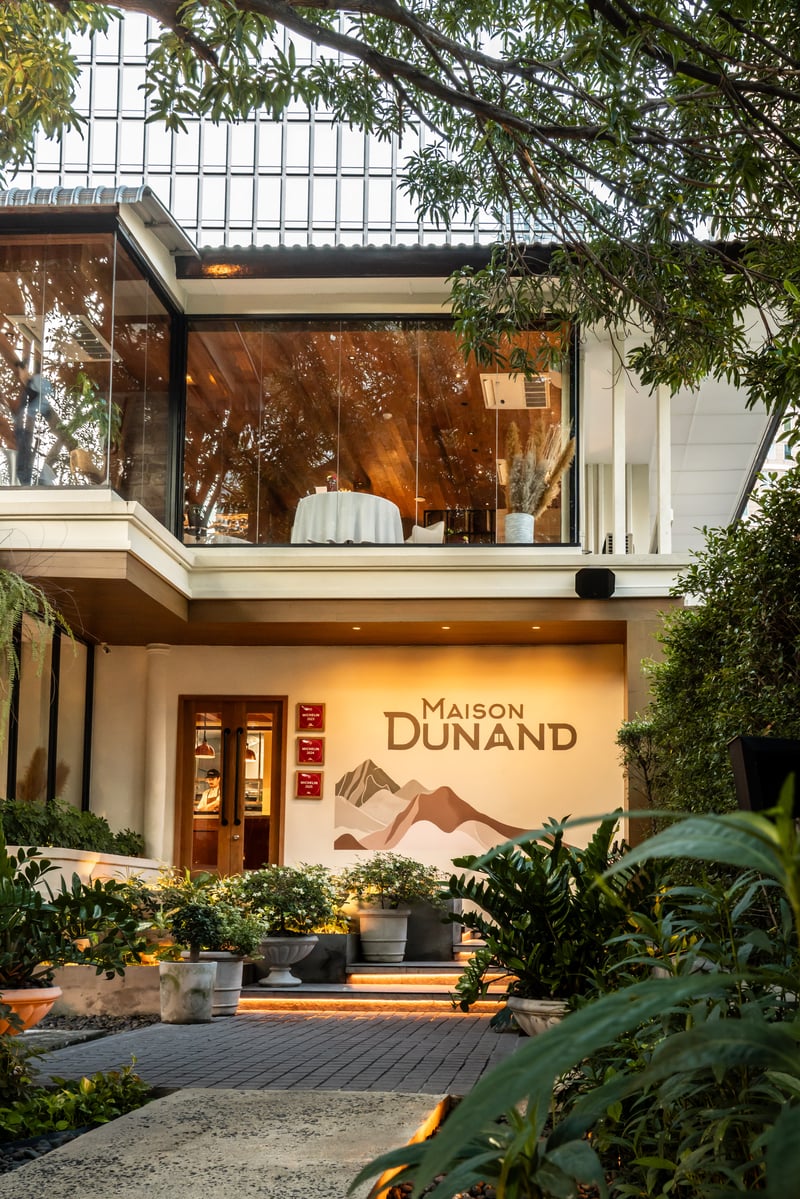
Hidden at the end of a quiet alley in the bustling Lumphini district, INDDEE reveals its magic as soon as you step inside. Nestled in a century-old townhouse, this Michelin-starred Indian fine-dining restaurant transports guests far from the urban hustle. Spread over two floors, the spaces elegantly combine traditional architecture with contemporary touches, creating an intimate and immersive atmosphere. A lush garden, bathed in mist and lit by lighting designer Matteo Messervy's creations, offers a nearly surreal green cocoon where ferns caressed by the haze protect the restaurant's privacy.

Inside, INDDEE's design unfolds in perfect harmony between sophistication and modernity. The ground floor houses two open kitchens and a wine cellar, inviting guests to engage with the chefs' creativity. Upstairs, a bright dining room centers around a live cooking station, shifting between the transparency of a glass canopy and the warmth of a vaulted ceiling. Every detail, from the uniforms to the menus to the signage, has been conceived as an extension of the culinary experience, highlighting the place's deeply artisanal soul. INDDEE is not just a restaurant: it's a poetic immersion into contemporary India, seen through the lens of design and gastronomy.


Each Dish, a Region: India Told Through Flavors
At INDDEE, tasting becomes a multi-voiced culinary narrative led by chef Sachin Poojary and his team. Three menus are offered to suit every gastronomic curiosity: a 9-course journey, a vegetarian version just as inventive, and a shorter 7-course experience. Each dish draws from the chef's memories, origins, or discoveries and echoes a region or city of India — from Srinagar to Kochi. Behind each ingredient, a story; behind each pairing, a tribute to the gastronomic diversity of the Indian subcontinent, interpreted with precision and creativity in Bangkok.

To enhance the journey, INDDEE offers two food and drink pairing options. One, firmly oenological, features a carefully curated selection of wines, overseen by a Head Sommelier awarded the 2024 MICHELIN Sommelier Award. The other, bolder, explores sake, umeshu, and craft beers, for an unexpected multisensory experience. House cocktails, elegant spirits, and non-alcoholic options round out both offers.

India Reinvented in Nine Gourmet Stops
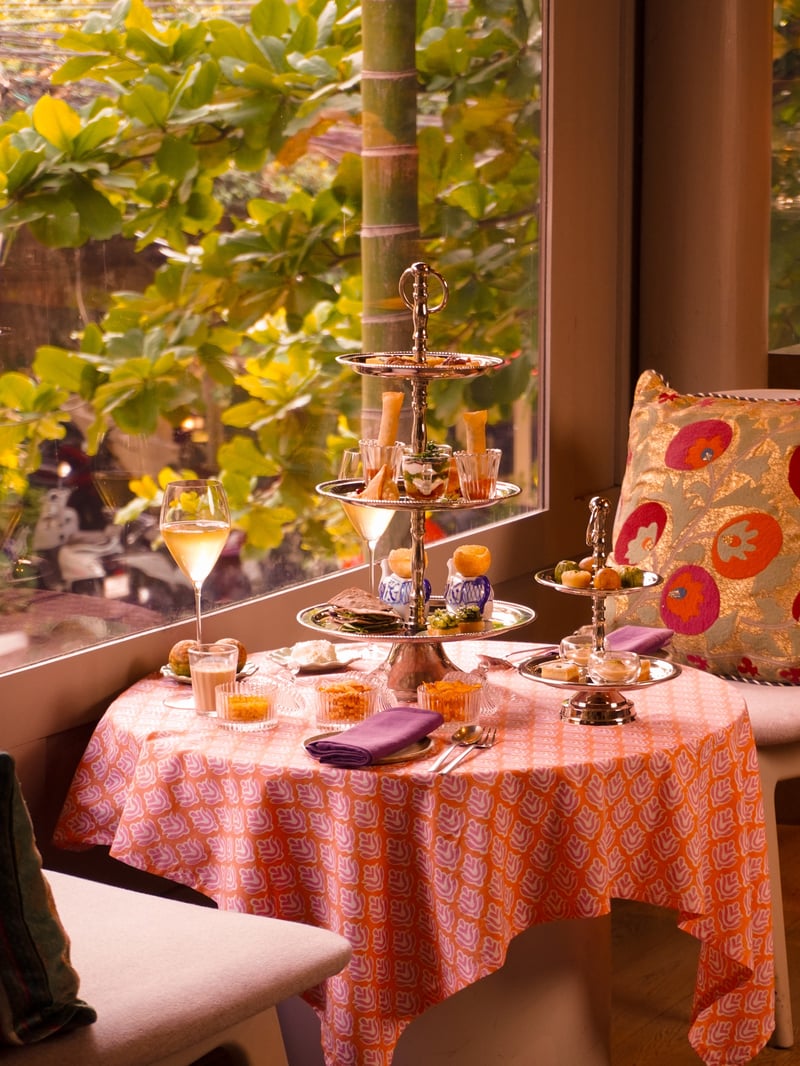
Our 9-course tasting menu began with a selection of 3 amuse-bouches. The first, called Sol Kadhi, features an oyster topped with a coconut milk and kokum-based seasoning, traditionally used to soften spicy dishes. It's accompanied by a rice cracker with Malvani Masala. The second bite pays homage to Indian tea snacks: an onion pakoda with a sweet chutney in the style of XO sauce, and a crispy Khari stuffed with kheema (spiced lamb), inspired by Mumbai's Irani cafés. It's served with a salty tea reminiscent of Marag Shorba, a lamb bone broth with milk, pistachios, almonds, and lemon oil. The last bite explores Chatpata — the balance of tangy, sweet, salty, and spicy — and comes with a glass of umeshu, a traditional Japanese plum liqueur, as part of the creative alcohol pairing. Inspired by pani puri and fruit chaat, it blends icy rhubarb pani, nuts, tamarind, pickled fennel, smoked yogurt, rhubarb salt, longan, bell pepper, and golden kiwi.


We began the nine courses with a dish named “Before Chillies,” recreating flavors as they existed in India for millennia before the Portuguese introduced chilies in the 15th century. This dish, from ancient South India, features a plantain and water chestnut Poriyal (sauté), accompanied by a spicy ginger and long pepper Kari — followed by an Unnakayi, a plantain dumpling.

“When the Portuguese Came” takes us to Goa, on India's west coast, to explore the culinary influences born of colonization. Grilled carabinero marinated in Recheado — a Goan sauce with chilies, spices, and vinegar — is served with a coconut and tropical fruit gribiche and a Recheado emulsion. A spicy, tangy Carabinero Ambotik Ceviche with local fruits complements it.

The next course honors Mumbai, the emblematic west coast city known for its delicious seafood. The famed Butter Pepper Garlic Crab is reimagined in a pure version, free of masala, relying instead on butter intensity, garlic sweetness, and pepper heat. A Spanish blue crab claw, served on a bed of vegetables and pearl millet, is seasoned with a sake saline solution and topped with garlic and chive butter — a refined reinterpretation of a seaside classic!

Next stop: Kolkata in eastern Bengal, celebrating Kasundi, nicknamed “Queen of pickles.” This fermented mustard paste was once made exclusively by high-caste women. Alaskan black cod marinated in gondhoraj lemon is charcoal-roasted and served with four sides: fermented lemon peel, panch phoron vinaigrette, homemade kasundi sauce, and a pickled ginger bud. Each offers a unique tasting experience.

The fifth stop honors India's iconic breads, with a choice of six regional varieties. I chose a Kulcha, a flaky stuffed bread from Punjab, reimagined here with fennel and gorgonzola. My husband opted for an Usal Pao, a Maharashtra classic with a spicy moth bean curry (Usal) and soft bun (Pao). Traditionally dipped in broth, our version reinterprets the Pao as a sourdough focaccia.

The next dish pays tribute to the legendary Galouti Kebab, created in the Awadh kingdom for a toothless king who refused to give up his favorite dish. He demanded a kebab so tender it required no chewing. INDDEE's version captures this delicacy with a Foie Galouti made from Hungarian foie gras infused with royal Awadhi spices. It's served with marinated cherries and pears, a rich aromatic jus, and shirmal — a saffron and cardamom bread traditionally paired with this regal dish.

Among the mains, we chose “Yesterday's Rice.” Inspired by Tamil Nadu's Thayir Sadam — a fermented yogurt rice made from leftovers — this dish celebrates a rural tradition meant to cool bodies in the fields. In this modern version, fermentation is enriched with yuzu juice and zest, and Japanese grilled eel replaces dried fish. It's served with crispy appalams and a mango-moringa-scented rassam, turning a rustic staple into a subtle and elegant plate.


The pre-dessert bridges savory and sweet, evoking the sacred scents that waft at the entrances of Indian temples — marigold, ashtar, tulsi. This temple flower sorbet blends marigold leaves, calendula, and plum jelly. The experience begins with a subtle marigold leaf hydrosol to reset the palate, followed by the sorbet, a final spritz of hydrosol, and a calament flower as a floral offering in transition.

The dessert elegantly reimagines Falooda, one of the oldest sweets in history, originally from Persia. Served in a sculptural bowl, it blends milk, basil seeds, and rose syrup, topped with crystallized petals. Its silky texture and floral freshness pay tribute to the legend of the Parsis, welcomed in India after sweetening a bowl of milk with sugar. A delicate, poetic take on a dessert full of meaning, celebrating hospitality and harmony.

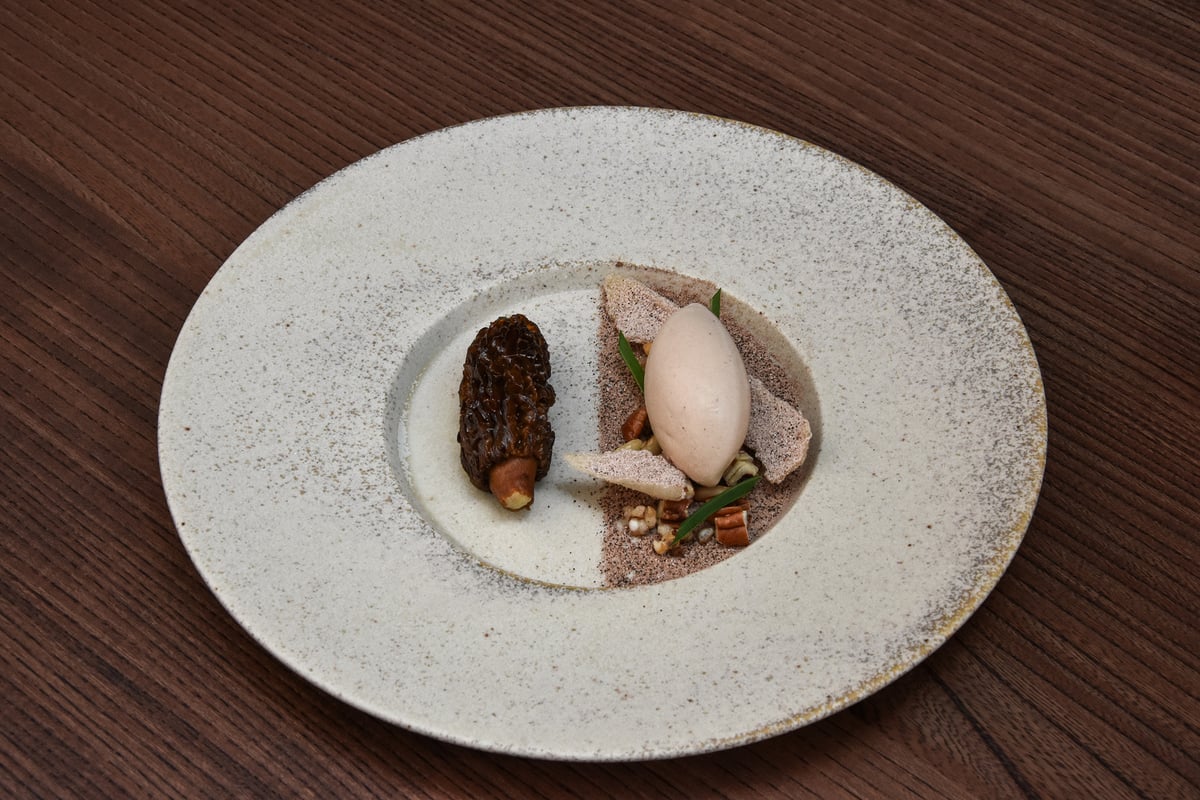
The second dessert honors the Himalayan spring when morels — or Gucchi — emerge in Kashmir's forests, sparking the famous “Gucchi Hunts.” Inspired by Shufta Kanagucchi, a rare festive dessert mixing morels and dried fruits, this dish features a honey-glazed longan morel, browned in butter and stuffed with apricot-pine nut khoya. It's served with a crispy shufta and ice cream subtly scented with mahali root, evoking the woody, creamy, and precious essence of the Kashmiri mountains.

The mignardises end the meal elegantly, inspired by Indian digestive traditions. Jeera Goli, a small sphere of cumin, tamarind, black salt, and green mango, recalls typical after-meal bites to aid digestion. Goan Perad, a soft pink guava and ghee sweet subtly spiced with Tellicherry pepper, evokes Goa's Portuguese influences. Finally, Chocolate Mukhwas blends 68% dark chocolate made with Godavari and Idukki beans with a mukhwas mix, used in India to refresh the breath and palate. A final note that's fragrant, indulgent, and deeply rooted in Indian culture.

My Opinion
INDDEE deeply impressed me, both for the exceptional quality of its cuisine and the narrative richness of its experience. I was captivated by this approach that doesn't merely serve refined dishes, but weaves them into a vibrant, personal, and culturally rich culinary story. Every bite was a surprise, every plate an intelligent and sensitive tribute to an Indian region or tradition. The elegance of the setting, the aesthetic coherence down to the finest details, and the originality of the food and drink pairings fully convinced me. To me, INDDEE is far more than a Michelin-starred restaurant: it's a sensory journey of rare elegance, a true manifesto for a poetically and masterfully reinterpreted contemporary India.
Contact Details
INDDEE