Apothéose in Tokyo: When French Cuisine Echoes Japanese Nature


Perched above Tokyo, Apothéose stands as a place apart, at the crossroads of cultures and sensibilities. Here, Nordic design dialogues with the energy of the Japanese capital in a deliberately hushed, almost introspective atmosphere. Every choice — from volumes to materials, from light to gestures — contributes to a single intention: creating a setting conducive to contemplation and listening to flavor. Awarded one Michelin star, Apothéose transcends the status of a gastronomic table to offer a masterfully curated interlude, where aesthetics and cuisine move in step toward a sober, demanding, and profoundly contemporary expression.
When Nordic Design Meets Tokyo
Located on the 49th floor of TOKYO NODE, atop Toranomon Hills Tower, Apothéose offers a spectacular view of Tokyo while giving the impression of being cut off from the world. From the entrance, a sculptural reception counter leads to a hushed lounge where natural tones dominate. The terracotta tile floor, walls covered in light, chalky plaster, and patinated brass panels create a subtle contrast between refined rusticity and contemporary elegance. The access corridor, reminiscent of a precious wine cellar, opens onto two sculptural brass doors that open automatically to reveal a striking panorama of the Tokyo skyline.

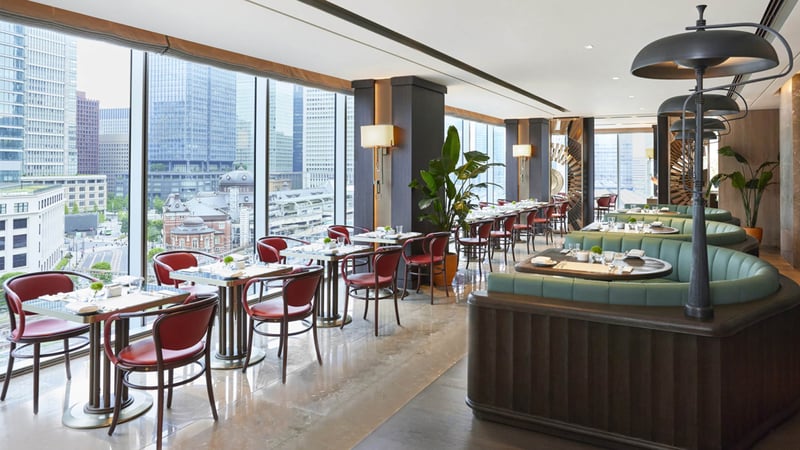
The dining room, designed by Danish studio Space Copenhagen, embodies a warm and refined aesthetic. It is structured around a central stone service station, which serves both as a functional heart and an architectural element, displaying artisanal ceramics, glassware, and sculptural objects. The custom-designed furniture blends solid light oak with luxurious materials: the Gleda chairs, slightly reclined, are upholstered in Sørensen's gray Nuance leather and refined fabrics by Dedar, while the solid white oak tables, also created by Benchmark, bring a calm and elegant robustness. Como portable lamps by &Tradition placed on the tables diffuse a soft light, complemented by Michael Anastassiades mobile suspensions that bring movement and poetry to the space.

Natural light plays a central role in the ambiance of the venue: large bay windows frame the city and let in the variations of daylight, filtered by translucent fabric veils in natural tones. Artificial lighting remains discreet, designed to enhance materials without ever dominating the space. In a corner, a painting by Hideaki Yamanobe, Through the Clouds, reinforces the sensation of suspended calm. The whole composes a tactile, soft, and meditative atmosphere, where every detail — down to the texture of fabrics or the shade of tiles — contributes to creating an intimate and profoundly mastered experience.
The Dialogue of Two Culinary Cultures
Born in Shiga Prefecture in Japan, Keita Kitamura was shaped between two culinary cultures. Trained for eight years under Yoshihiro Narisawa, he then left for France where he spent more than fifteen years refining his gastronomic language, notably in demanding Parisian establishments, until he obtained a Michelin star that he would keep for several years. This formative period instilled in him an absolute rigor of taste, a sense of sauces, slow cooking, and detail, but also a profound conviction: great cuisine is born from total respect for the product and for those who cultivate it.

Back in Japan, the chef undertook almost obsessive fieldwork. He traveled across the archipelago meeting producers, fishermen, and artisans, selecting ingredients shaped by specific climates, soils, and techniques. His cuisine pairs these exceptional Japanese products with mastered French techniques, without ever masking them. The menus evolve constantly: slight daily adjustments, recipes reworked each year, sometimes even a change of style. This assumed instability responds to a single immutable principle: treating flavor with the utmost seriousness and letting the natural expression of ingredients speak.
The concept of Apothéose restaurant revolves around this quest for the summit: a gastronomy both rooted in French tradition, nourished by in-depth research on Japanese products, and attentive to the present moment. Just a few months after opening, the restaurant was awarded a Michelin star, confirming the accuracy of the chef's vision and the precision of his work. The name, which means "pinnacle," echoes this ambition, but also the experience offered: a sensitive, demanding cuisine in perpetual movement, designed to leave a lasting mark on diners' memories.
Tale of a High-Flying Dinner
We opted for the Menu Unique, the sequence of which was presented to us after a moment of waiting punctuated by a glass of 1688 Grand Blanc, a non-alcoholic sparkling beverage made in France from dealcoholized wine. Elegant, lively, and delicately fruity, it proved an excellent prelude to dinner, accompanying the first notes of the meal with the finesse of a great wine — without a drop of alcohol.


Very quickly, a trilogy of amuse-bouches came to sketch the contours of Keita Kitamura's culinary universe, between French rigor and Japanese rootedness. The beetroot gougère, light and flavorful, is presented on an organic structure combining burnt wood and metal, accentuating the sculptural dimension of the service. Alongside it, a tartlet built around potato explores this humble ingredient in all its complexity, between crispy, melting, and earthy nuances. Finally, a spinach and miso crêpe, intensely green, rests on a raw stone, garnished with fresh herbs and a nasturtium leaf.


The first starter continues this approach with a plate of great delicacy centered on abalone, steamed to preserve its silky and subtly briny texture. Accompanied by caviar, crystalline tomato water, celery, and pinna shell, the dish plays on freshness, transparency, and precision. Young shoots and petals enrich the composition with a floral and vegetal dimension. The non-alcoholic pairing, an infusion combining sencha tea juice, wasabi shoot, and Japanese mint, extends the marine notes in a refreshing and airy vegetal register.

We then enter a warmer and more indulgent dimension with a dish centered on Japanese eel. Prepared as tempura, it envelops a millefeuille of brown mushrooms and cured ham from Japanese black pig, whose crispy texture contrasts with the melting heart. Deep-fried butternut squash strands add relief and crunch, while the butternut sauce, perfumed with Japanese sake, envelops the whole in an umami sweetness. The pairing of iced chrysanthemum flower tea and Setouchi carrot balances the dish with a floral, slightly sweet touch.

In a fresher but equally meticulous register follows a sea bream tartare. Seasoned with finger lime and enhanced with pomelo segments, it is topped with Japanese radish slices carved into flowers, forming a composition of great visual precision. Dots of white wine sauce bring roundness and tension to the whole. The pairing based on Japanese muscat grape juice, grapefruit, and pear milk extends this aromatic freshness in an almost lyrical partition.
The following dish returns to earthier notes, with a crispy roll inspired by a spring roll, filled with eggplant, Tuscan white truffle, and Japanese Tokachi Royal Mangalica pork. The whole is covered with a cloud of Takara cheese aged in Hokkaido, partially melted upon contact with the golden pastry. The pairing, composed of yomogi herb juice, turnip, and lemongrass, counterbalances the richness of the dish while dialoguing with its dairy and woody aromas. A powerful and textured bite, both rustic and refined.

The vegetable tourte, elegant throughout, showcases cabbage in a palette of textures and colors. Between thin, golden puff pastry lie layers of red and green cabbage, intertwined with king oyster mushrooms. A full-bodied vegetable jus coats the whole, reinforced by a red cabbage purée. The hojicha tea from Fukuoka, lightly smoked, accompanies the dish by extending its woody and earthy notes, for a moment rooted in the vegetal yet technically demanding.

Before moving on to the meat courses, a kabocha squash bread is served warm, its soft and elastic texture evoking that of a mochi. Its sweet, almost sugary flavor is balanced by a burnt leek butter with smoky and grilled aromas. An apparently simple bite, but of great precision, preparing for the rest of the meal.

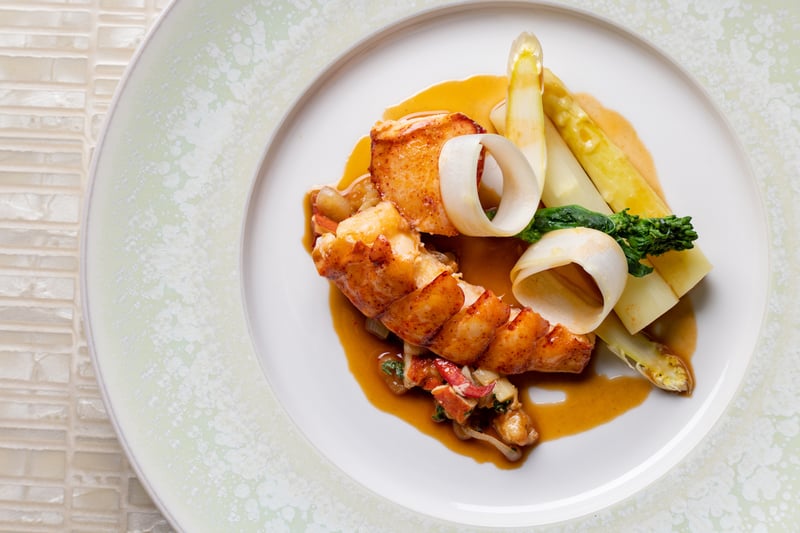
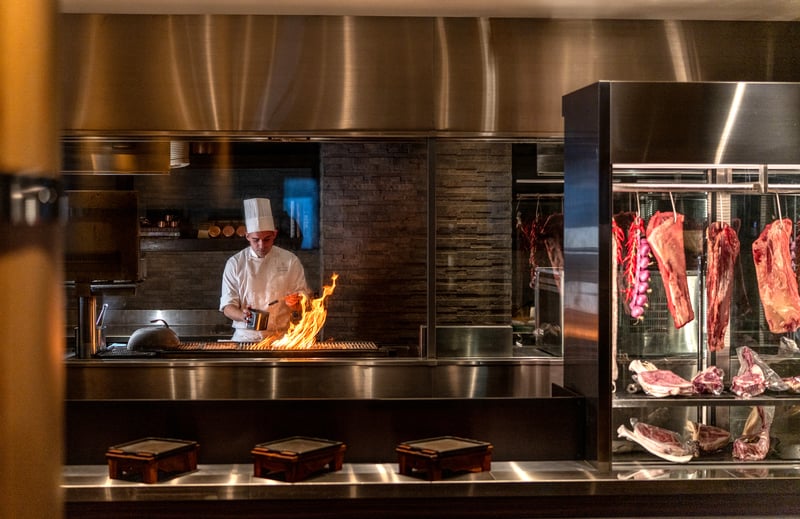
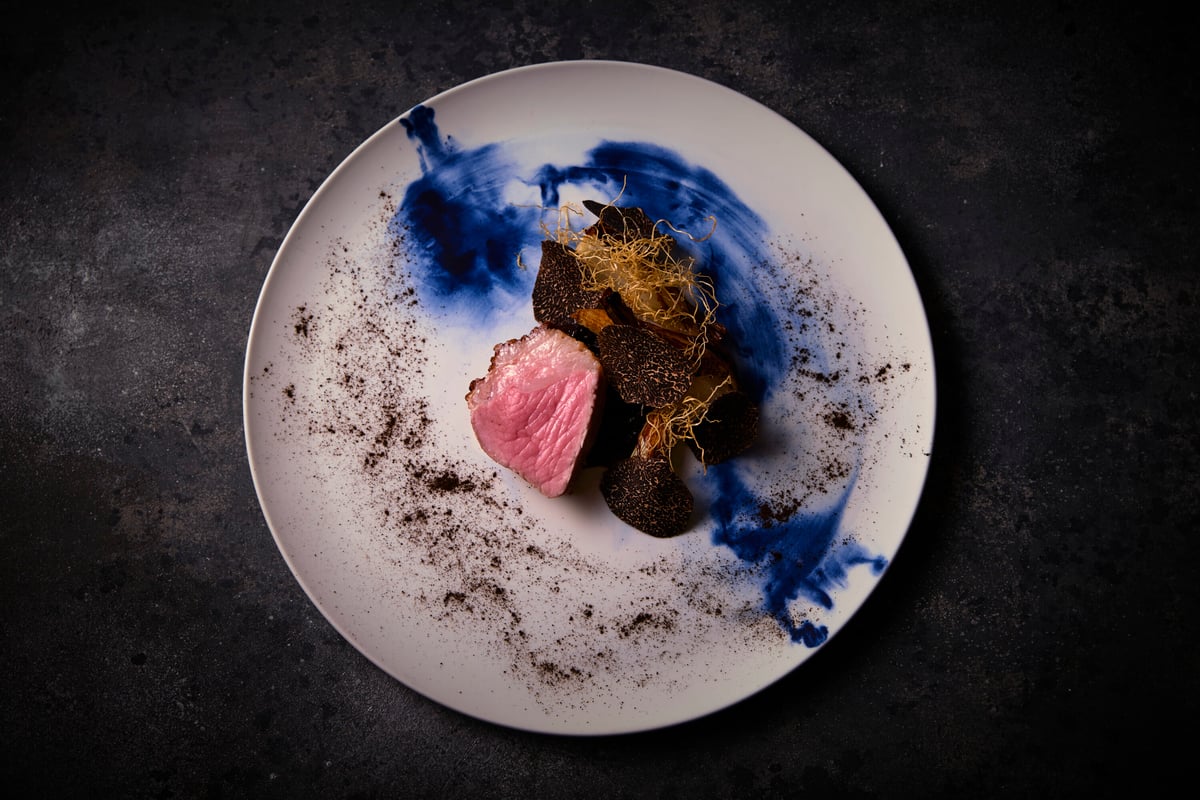
The main course pays homage to Japanese wagyu, cooked over binchōtan charcoal. The juicy, marbled meat is accompanied by maitake mushrooms and sautéed spinach, topped with a glistening Bordelaise sauce. A celery purée softens and balances the whole. The presentation, conceived as a pictorial work, echoes the chef's universe, between art and flavor. The pomegranate juice and Kyoto smoked tea bring a fruity tension and perfectly calibrated woody touch.

As a pre-dessert, the chef offers a surprising interpretation of ginger ale, transformed into an icy, crystalline construction. A chili panna cotta, milk ice cream, and lemon-ginger granita are layered, topped with crackling sugar and jelly flowers. The whole evokes the effervescence and vivacity of the original soda, but in a gastronomic version full of contrasts. The vacherin that follows as the main dessert plays on the sweetness of chestnut and the depth of hojicha. The meringue, crispy, envelops a chestnut ice cream and a roasted tea insert. Biscuit shards and creamy touches enrich the textural palette, in a balance between French tradition and Japanese sensibility.


Finally, the mignardises, shaped like lacquered beans, contain a rose and white chocolate ganache, with at their heart a floral and tangy fruit paste. Crunchy, melting, visual delicacy: everything is there. They are accompanied by a light and soothing Japanese herb infusion, which closes the meal with the same elegance that opened it. A gentle conclusion, faithful to the spirit of Apothéose.

My Opinion
At Apothéose, every element — from architecture to service, from light to the smallest ingredient — contributes to a profoundly coherent overall vision. The venue, suspended between sky and city, becomes the setting for a subtle dialogue between Nordic aesthetics and Japanese sensibility. Carried by Keita Kitamura's refined cuisine, the culinary experience transcends cultural boundaries, constantly exploring the balance between rigor and emotion, tradition and innovation. Apothéose offers a journey: a suspended, rare moment where taste, beauty, and time unite in absolute harmony.
Contact Details
Apothéose