BEIGE Alain Ducasse Tokyo: When Chanel Meets Haute Gastronomy


Suspended above the buzz of Ginza, BEIGE Alain Ducasse Tokyo reveals itself as a destination apart, where luxury is experienced through restraint and precision. At the crossroads of fashion and gastronomy, this restaurant embodies a rare encounter between the timeless elegance of Chanel and the culinary vision of Alain Ducasse. Here, every detail — from the setting to the plates — tells the same story: that of a French art de vivre reinterpreted in Japan, subtle, contemporary, and deeply harmonious. An experience conceived as a suspended interlude, where sight, taste, and emotion move in unison.
In the Heart of Ginza, An Exceptional Address
Located atop the Chanel flagship in Ginza, BEIGE Alain Ducasse Tokyo sits at the heart of one of Tokyo's most prestigious districts, a true showcase of international luxury. Surrounded by bold architecture and iconic maisons, the restaurant occupies the 10th floor of the Chanel building, a natural meeting point between haute couture and haute gastronomy. Born from the collaboration between Chanel and chef Alain Ducasse, this venue embodies a contemporary vision of the French art de vivre — elegant, controlled, and perfectly in tune with the sophisticated energy of Ginza.

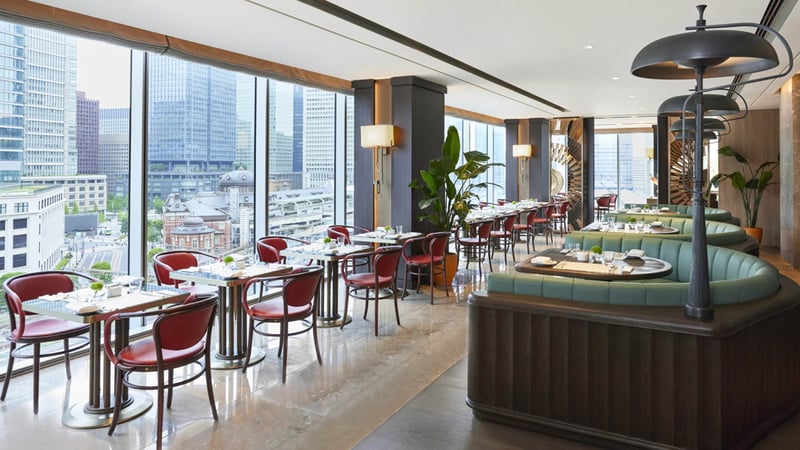
The restaurant's style extends this alliance with an elegance marked by restraint. Designed by architect Peter Marino, the interior unfolds in a palette of beige and cream tones — a nod to Coco Chanel's signature color — and plays with noble materials such as wood, copper, and lacquer. Tweed-inspired armchairs, soft lighting, and regularly renewed artworks create a soothing atmosphere that is both luxurious and relaxed. Subtly integrated Japanese influences enrich this refined universe, giving the space a discreet sophistication where luxury reveals itself through simplicity.

When French Techniques Elevate Japanese Ingredients
The table offers contemporary French cuisine faithful to Alain Ducasse's philosophy, founded on purity of flavor and absolute respect for the product. Recipes favor seasonal ingredients, handled with precision through classical French techniques, in a constant pursuit of balance and lightness. Far from any showmanship, the plates highlight vegetables, grains, seafood, poultry, and carefully selected meats, with particular attention paid to textures, aromas, and the final sensation, always clean and elegant.


This cuisine finds its singularity in the subtle dialogue between France and Japan. The finest French products meet exceptional Japanese ingredients sourced from across the archipelago and chosen with the seasons, giving rise to a refined and contemporary interpretation of French gastronomy. Food and wine pairings, built around great French estates and crus, extend this coherent and masterful experience. Awarded one Michelin star, the restaurant embodies an art of living where gastronomic rigor is expressed with delicacy and modernity.


Alain Ducasse, A Visionary Chef with Global Influence
Born in the Landes and raised on a farm, Alain Ducasse developed early on a taste for a cuisine guided by nature and the product. Entering the kitchen at 16, he trained under major figures such as Michel Guérard and Alain Chapel, before being appointed chef of Louis XV at the Hôtel de Paris in Monaco. At just 33, he earned three Michelin stars there — a historic first for a hotel restaurant — and repeated the feat in 1998 with his Parisian restaurant. A visionary and entrepreneur, he designs his restaurants holistically — from recipes to design, from tableware to kitchen organization — and now oversees a group of establishments ranging from bistros to three-starred restaurants across several countries. Deeply committed to transmission, he founded Ducasse Education and continues to spread his vision of gastronomy and the art of living through numerous projects, from dining and hospitality to chocolate, coffee, and pastry.
The Signature Menu as a Narrative Thread
This lunch centered around the Signature Menu unfolded as a perfectly orchestrated progression, alternating technical precision, unapologetic indulgence, and contrasts, in a very contemporary reading of Alain Ducasse's cuisine. The meal opens with a glass of Veuve Borie, a non-alcoholic sparkling wine, accompanied by three bites that immediately set the level of expectation. It begins with a small, nearly black sphere, almost mineral in appearance, whose charcoal coating contrasts with an intensely savory pork sausage center. On the palate, smoky notes underline the richness of the meat, offering a sensation that is both rustic and impeccably controlled. The cheese gougère, golden and slightly crisp on the outside, reveals an airy, melting texture, carried by a cheese flavor that is present yet balanced — comforting and true to the spirit of this great French classic. Finally, the mushroom tart stands out for its finesse: a crisp base supports a creamy filling where the mushroom expresses itself with elegance, between woody notes and earthy sweetness.


Continuing on, the amuse-bouche features a low-temperature cooked Hokkaido oyster, handled with great delicacy. The gentle cooking preserves the pearly flesh and silky texture of the oyster, juicy and subtly briny. It rests on a creamy base that brings roundness and comfort, while an intense green sauce — herbaceous and fresh — structures the dish. Finely chopped herbs complete the plate, adding relief and elegance to this bite of great purity.

Vegetables then take center stage with the winter vegetable cookpot, a true seasonal exercise in style. Vegetables from across Japan — daikon, greens, and roots — are prepared using different cooking methods to reveal their natural textures and flavors. A fine daikon radish gel brings freshness and clarity, while celeriac mousse envelops the dish in creamy softness. A generous spoonful of caviar crowns the plate, adding iodized intensity and depth, in constant dialogue with the vegetal sweetness. The balance is clean, precise, and remarkably mastered.


The pearly scallop marks a rise in intensity while remaining firmly rooted in roundness. Just seared, it retains a tender, delicate texture, set atop gratinated pumpkin with a naturally sweet softness. Smoked bacon cream adds enveloping richness and extends the smoky notes without weighing the dish down. The sauce, made from scallop trimmings and pumpkin, ties the plate together with elegance, while pumpkin chips bring crunch. Thin slices of white truffle finally crown the dish, releasing an intense, noble aroma that elevates both the iodine and the vegetal indulgence.


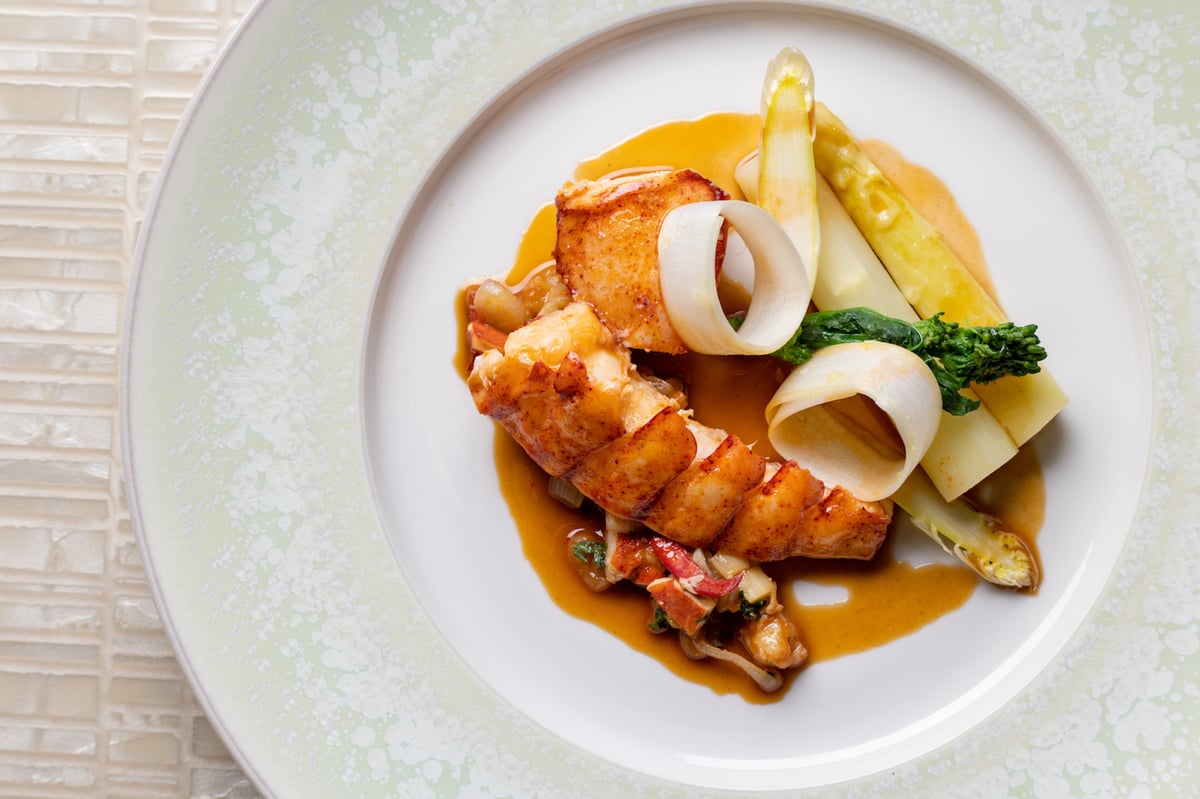
Next comes the lobster and porcini fricassée, with decidedly autumnal accents. The lobster, tender and delicately pearly, is enhanced by fleshy porcini mushrooms with deep, woody notes. Fresh herb pasta adds suppleness and vegetal lift, harmoniously binding the elements together. The dish is coated in a delicate lobster sauce, derived from a concentrated yet perfectly balanced bisque, which envelops the crustacean without ever overpowering it. A few light foams finish the composition, in a precise dialogue between iodine and forest floor.
The main course centers on Kumamoto Wagyu beef from the Kyushu prefecture, pan-seared with great precision to preserve the finesse of its marbling. The meat, remarkably tender, develops deep flavors supported by a concentrated beef jus that underscores its richness. Confit leeks and potatoes bring sweetness and roundness, while a touch of peppermint refreshes the dish, adding an unexpected herbaceous note and an elegant lightness.

Before dessert, the persimmon and yuzu pre-dessert plays its transitional role with precision. The persimmon, soft and lightly candied, is awakened by the fine, aromatic acidity of yuzu. A quenelle of ice cream, smooth and delicate, brings freshness and balance, cleansing the palate with clarity. Among several dessert options, I chose the Camellia chocolate dessert from the Alain Ducasse Manufacture in Tokyo, which embraces unapologetic indulgence. The chocolate expresses itself with intensity, supported by hazelnut, while apple adds freshness and fruity tension. Served alongside, the chocolate ice cream extends the cocoa in a fresher, creamier form, playing on clear contrasts between depth, roundness, and freshness. My husband could not resist the famous rum baba, as in Monte Carlo, served as a true ritual. At the moment of service, the rum is generously poured, soaking the still-warm baba and revealing its full aromatic power. The texture remains soft, almost airy. Whipped cream, added in the same gesture, softens the alcoholic intensity and brings a contrast of freshness. A great classic, served without compromise.


Finally, the mignardises close the lunch with playful elegance. Presented on a wooden stand with organic shapes, they combine fine chocolates with clean lines and fruit tartlets with concentrated flavors. A final indulgent note — precise and joyful — that extends the experience beautifully and leaves a gentle, perfectly controlled impression.

My Opinion
BEIGE Alain Ducasse Tokyo appears as a natural extension of the Chanel universe, where aesthetics, rigor, and attention to detail converse with Alain Ducasse's cuisine. The décor imagined by Peter Marino sets an elegant framework, conducive to tasting and contemplation, far from any ostentatious display. In this suspended setting above Ginza, gastronomy becomes an extension of haute couture: precise, mastered, founded on the right gesture and the nobility of the product. The vision of a visionary chef and the care given to every detail compose a refined, intimate, and deeply contemporary interlude.
Practical Information
Many thanks to BEIGE Alain Ducasse Tokyo for the invitation to discover their establishment. Needless to say, I remain completely free in my opinions in this article!